Rayman Legends Retold Dragon Rides Guide
Steer the new 3D flight segments, protect Teensies, and tune Autoshoot before a tough corridor.
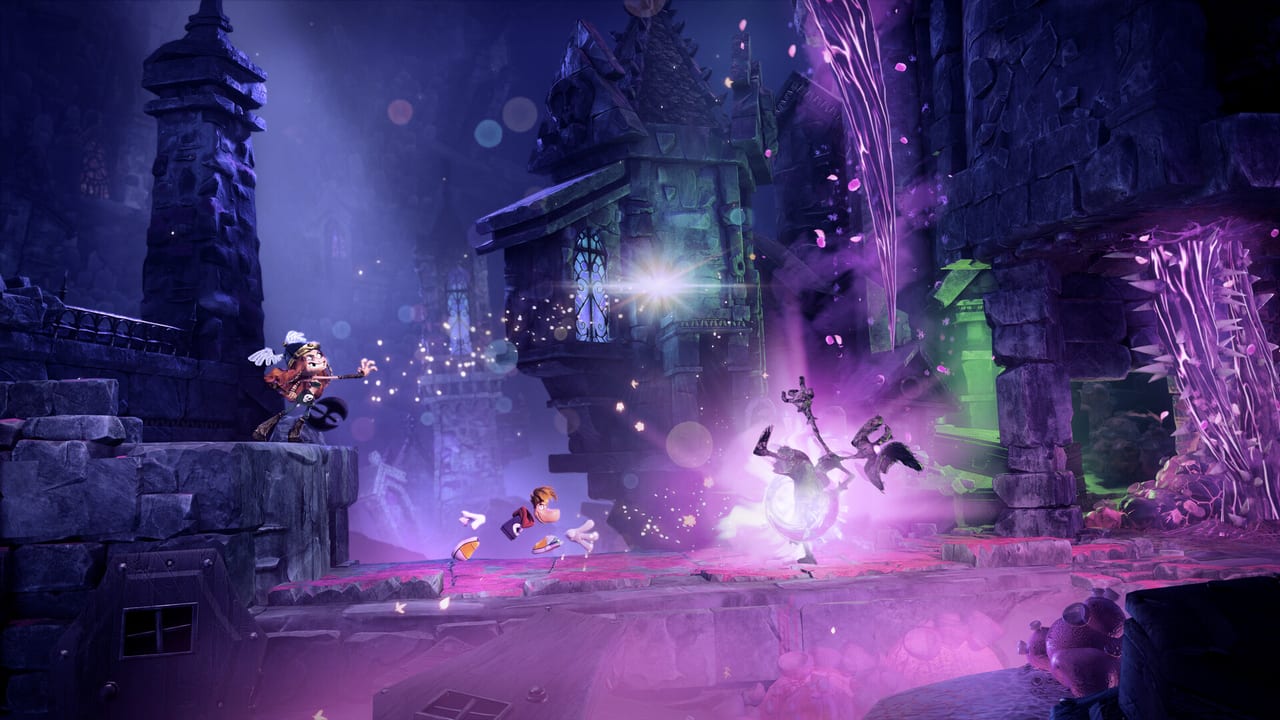
Dragon rides are one of the clearest “this is Retold” moments in Rayman Legends Retold. While the remake preserves side-scrolling Legends DNA, Snowdrop-powered 3D flight sequences carry you between locations, weave through obstacles, and ask you to escort Teensies under pressure. This guide explains what to expect from ride stages, which comfort options matter, and how to keep a couch co-op group alive when the camera opens up.
If you are still configuring binds, read the Controls guide first. For shared-screen roles, keep the Co-op guide handy.
What dragon rides are
Ubisoft positions dragon rides as fuller 3D gameplay where players travel from one location to another via dragon flight, avoiding obstacles along the way. Preview coverage describes four-way movement, fire breath where prompted, and Teensie escort objectives. These segments break up pure 2D corridor reading and showcase the remake’s camera work — the playground bends, the path widens, and sudden hazards come from more directions than a flat plane.
Dragon rides sit alongside other level types you will already know from Legends structure: castle dungeons, forest and swamp traversal, underwater caverns, invaded countdown runs, and musical stages. Treat rides as their own skill check rather than “the same jumping with a skin.”
Controls and comfort settings that matter mid-flight
Retold’s accessibility package is especially useful here:
- Axis inversion for X and Y on sticks and mouse during ride gameplay — flip these immediately if the default camera fights you.
- Autoshoot during Dragon Rides — reduces repetitive fire-breath inputs so you can focus on steering.
- Hold / toggle options elsewhere in the game still matter before and after rides when you return to glide-heavy platforming.
- Camera shake can be disabled if flight chaos plus shake causes discomfort.
- Vibration intensity can be lowered so haptic feedback does not mask timing cues.
- Remapping remains available on gamepad and keyboard across PS5, Xbox Series X|S, Nintendo Switch 2, and PC.
There are no QTEs. You will not be trapped in a button-sequence cutscene to finish a ride — success comes from movement and awareness.
Solo strategy
- Learn the safe corridor first. On a new ride, prioritize survival over perfect Lum collection. Dead heroes collect nothing.
- Enable Autoshoot if fire inputs compete with steering. You can still steer aggressively while shots fire on an interval.
- Watch Teensie escorts as primary objectives when the level frames them that way. Losing escorts is often worse than missing a cosmetic Lum line.
- Use Fairy Blessing only if you need it and the stage allows assists. Remember Blessing is unavailable in hubs, Kung Foot Evo, and Cave of Trials — rides inside the story adventure are the relevant case. Default invoke is L2 / LT / ZL when enabled.
- Replay for cleanup after you know obstacle patterns. First clear = route knowledge; second clear = Lum and Teensie completion.
Hearts still do not save you from every failure state. Some collisions and falls fail the attempt outright — fly as if spare hearts are insurance for bumps, not a license to ignore walls.
Co-op dragon rides
In co-op, shared-screen flight can get busy. Before the segment starts:
- Decide who calls obstacles aloud (“spike left,” “dive now”).
- Assign one player to watch Teensie escorts if the objective requires it.
- Agree not to bump allies into hazards for jokes until everyone has a clear.
- Confirm every controller is connected; a disconnect mid-ride is brutal.
Murfy-style environmental prompts are less central in open flight than in dungeon corridors, so the usual Murfy specialist role may shift into a “spotter” role instead. After the ride lands, return to standard Murfy tickle / cut / crank duties in the next hub or stage.
Four-player groups should accept that the camera must frame everyone — do not scatter to opposite corners of a wide flight lane if that yanks the view into danger.
How rides fit the wider remake
Rayman Legends Retold launches December 3, 2026 (delayed from October 1, 2026) as a remake of the 2013 game by Ubisoft Montpellier and Ubisoft Milan. Explorable hubs — Tree of Tranquility plus realm spaces such as Old Teensie Kingdom, The Stinkbog, and Mystic Mesa — feed into levels that may include rides as connective tissue or featured set pieces. Story pressure from a shadowy villain and Dark Teensies gives the journey higher stakes, while fully voiced cinematics (David Gasman as Rayman, Billy West as Murfy, Elana Dunkelman as Barbara) bookend major movements across the Glade of Dreams.
Later, the progressive Land of the Livid Dead leans on Fairy Radiance rather than flight mastery, so do not assume every endgame skill is a dragon skill. Likewise, Cave of Trials and Kung Foot Evo test different muscles. Rides are one pillar of Retold’s “more 3D” promise, not the whole remake.
Music by Christophe Héral and Grant Kirkhope still matters in flight: audio cues and score swells can telegraph intensity even when the mode is not a formal musical stage. Keep music audible enough to feel pacing, especially if Autoshoot frees your fingers.
Practice plan
- Day one: Finish Getting Started onboarding, set axis inversion, clear the first ride you encounter with Autoshoot on.
- Week one: Replay early rides for Teensie escorts and Lum paths; try once with Autoshoot off if you want higher engagement.
- Co-op night: Run a ride with callouts enabled; then decompress in Kung Foot Evo if the group is tense.
- Endgame prep: Keep ride comfort settings saved before long sessions that mix flight, music levels, and eventual Livid Dead Radiance stages.
Related reading
- Guides Hub — full tutorial map
- Controls — remapping, Automatic Actions, Fairy Blessing
- Co-op — four-player roles and griefing rules
- Musical stages — rhythm levels that also punish distraction
- Land of the Livid Dead — Fairy Radiance endgame realm
- Cave of Trials — daily and nightmare challenges
Dragon rides are Retold showing off Snowdrop space — wide lanes, fire breath, Teensies in tow, and a living-room full of shouting. Invert your axes, turn on Autoshoot if you need it, and treat every first flight as reconnaissance for the clean run that follows.
Frequently Asked Questions
Quick answers before you jump into the Glade of Dreams.
What are dragon rides in Rayman Legends Retold?
They are new 3D flight segments where you travel between locations on a dragon, avoid obstacles, use fire breath where prompted, and may escort Teensies. They expand beyond the original game’s flatter presentation.
Is there an accessibility option for shooting while flying?
Yes. Autoshoot during Dragon Rides reduces repetitive fire inputs so you can focus on steering. Axis inversion for ride gameplay is also available.
Do dragon rides use quick time events?
No. Retold has no QTEs. Ride success depends on movement, awareness, and optional Autoshoot — not button-sequence prompts.
Any tips for co-op rides?
Assign a spotter for obstacles or Teensie escorts, keep players close enough for a stable shared camera, and finish controller pairing before the segment starts.
Are dragon rides the same as Land of the Livid Dead content?
No. Livid Dead is a progressive sixth realm built around Fairy Radiance. Dragon rides are flight set pieces that appear as part of Retold’s broader 3D expansion.